Can a Device in Your Pocket Help With PTSD? What 500 People Discovered About PEMF Therapy
You’re sitting on the couch at 2 AM. Again.
The house is quiet, but your nervous system isn’t. Your heart is hammering over something that happened years ago — something your body refuses to let go of. You’ve tried the medications. You’ve sat in the therapist’s chair. Maybe it helped. Maybe the side effects were worse than the symptoms. Maybe you couldn’t get an appointment for six weeks because every clinician in your area has a waitlist.
If this sounds familiar — or if it sounds like someone you love — you’re not alone. And you’re not out of options.
Affiliate Disclosure: This article contains affiliate links. If you purchase through our links, we may earn a small commission at no additional cost to you. We only recommend products we have personally evaluated and believe in.
There’s a pocket-sized device producing clinical results that most people haven’t heard of yet. It doesn’t require a prescription. It doesn’t require a therapist’s office. And in an ongoing study with over 500 participants, it achieved something almost unheard of in the world of PTSD treatment: a 98% success rate.
This is the story of the Resona Health Vibe — and what the science of Pulsed Electromagnetic Field (PEMF) therapy might mean for people living with the invisible weight of trauma.
PTSD by the Numbers: Why We Need New Options
Post-Traumatic Stress Disorder isn’t rare. It isn’t a weakness. And it isn’t limited to combat veterans — though they carry a disproportionate share of the burden.
In the United States, roughly 13 million adults are living with PTSD in any given year. That’s about 5% of the adult population. Among military veterans, the numbers are significantly higher: 14% of male veterans and 24% of female veterans served by the VA in fiscal year 2024 carried a PTSD diagnosis.
The standard treatments — Cognitive Behavioral Therapy, EMDR, Prolonged Exposure therapy, and medications like SSRIs — help many people. But they don’t help everyone. Some individuals don’t respond to talk therapy. Others can’t tolerate the side effects of medication: nausea, weight gain, sexual dysfunction, emotional blunting. And for people in rural areas or without insurance, getting consistent access to a qualified trauma therapist can be nearly impossible.
This gap — between people who are suffering and treatments that are accessible, affordable, and effective — is exactly where PEMF therapy enters the conversation. Research into PEMF therapy for PTSD is growing rapidly — and the clinical results are worth understanding.
PEMF Therapy: The Science Behind the Signal
Pulsed Electromagnetic Field therapy isn’t new. Its roots trace back to the work of Nikola Tesla, and today there are over 30,000 published papers and 600+ peer-reviewed studies documenting its effects. It’s used in clinical settings worldwide. What is new is having it available in a device you can wear around your neck.
Here’s the basic principle: every cell in your body carries an electrical charge. When cells are damaged or stressed — from injury, chronic inflammation, or the ongoing neurochemical chaos of trauma — they lose their electrical balance. PEMF therapy delivers low-frequency electromagnetic pulses that penetrate to the cellular level, helping to restore that balance. The result is improved circulation, reduced inflammation, and increased production of ATP — the molecule your cells use for energy.
Think of it like tuning a radio. When you dial to 103.5 FM, you hear that station clearly because your antenna is resonating at the exact same frequency as the transmitter. Your body works similarly. Different tissues respond to different frequencies. The Vibe delivers specific frequency protocols designed to target specific conditions — including PTSD.
This principle of resonance is the key. The magnetic field transfers energy to your cells. The frequencies tell the cells what to do with it.
The Vibe: A Rocket Scientist’s Answer to an Invisible Crisis
The Vibe was created by Mark L. Fox, a former NASA Space Shuttle Chief Engineer. Fox didn’t start in wellness. He started in rocket propulsion. But after studying frequency therapies for nearly 30 years and witnessing the impact of PEMF on veterans suffering from PTSD, he made a career-defining decision: he would take the clinical-grade PEMF technology that was being held hostage in expensive doctor’s offices and engineering it into something anyone could afford and carry in their pocket.
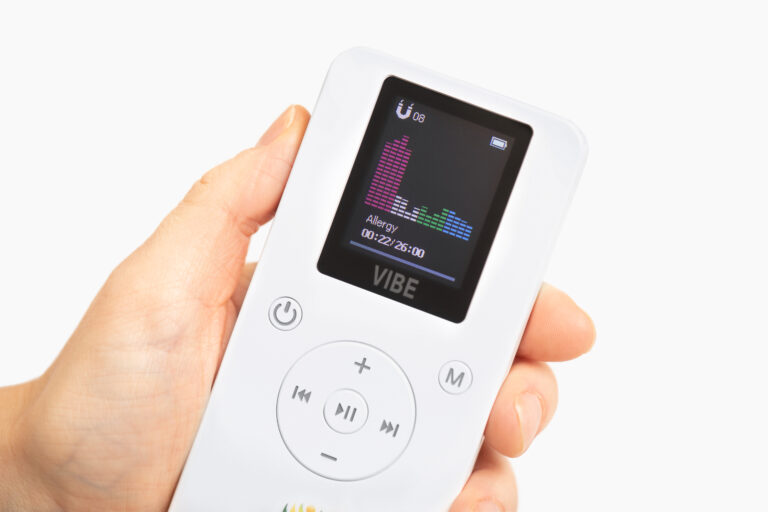
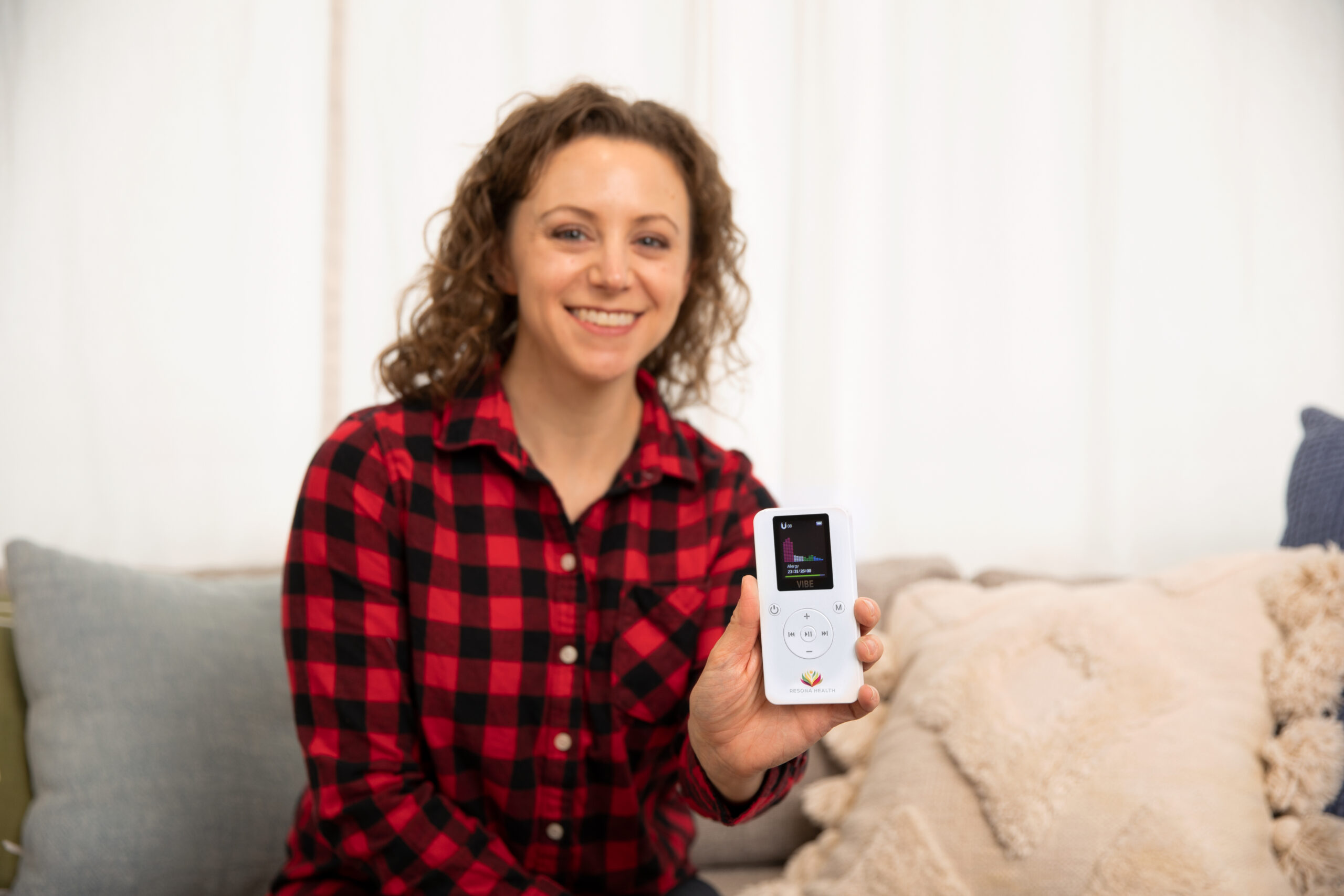
The device is about half the size of a cell phone. It weighs two ounces. It has over 60 pre-programmed protocols — including one specifically designed for PTSD that runs for 2 hours and 15 minutes. You select it, press play, hang it around your neck with a lanyard or slip it in your shirt pocket, and go about your day.
No drugs. No prescriptions. No clinic visits. No subscriptions.
The Vibe is classified as an FDA low-risk general wellness device, and it works on people and pets alike.
PEMF Therapy for PTSD: The Study That Changed Everything
This is where the numbers get remarkable.
Resona Health has conducted an ongoing research study — now with over 500 participants — measuring the Vibe’s effect on PTSD symptoms. Participants were instructed to run the PTSD protocol 3-4 times per week for 30 days, while staying well-hydrated (at least a liter of water in the four hours before each session).
Symptoms were measured using the PCL-5 (PTSD Checklist for DSM-5) — the same validated assessment tool used by the Veterans Administration. The PCL-5 is a 20-question survey scored from 0 to 80. The VA considers a score of 31-33 or higher as likely PTSD, and any score reduction greater than 11 points as both clinically and statistically significant.
Here’s what the study found:
92% of participants saw a reduction in their PCL-5 scores after 30 days.
66% achieved a score reduction greater than 11 points — meeting the VA’s threshold for clinical significance.
The average score dropped from 54.57 to 30.48 — a reduction of over 24 points.
The P-value was 0.000007. To put that in perspective, anything below 0.05 is considered statistically significant. This result means there is a 99.99999% probability that the improvement was not due to chance.
Zero adverse effects were reported. No side effects. No negative reactions. The treatment was well tolerated by every participant.
As additional participants submitted their data over time, the success rate climbed to 98%.
I want to be clear about something: these results come from Resona Health’s own study, not an independent third-party trial. That matters when evaluating evidence. But the combination of sample size (500+), statistical significance (p = 0.000007), use of a validated VA assessment tool, and zero adverse effects makes this data difficult to dismiss — and worth paying serious attention to.
What People Are Saying
The clinical data tells one story. The individuals behind the data tell another.
One participant described a noticeable decrease in the amount, intensity, duration, and frequency of flashbacks — along with an unexpected reduction in chronic pain flare-ups that had been triggered by PTSD episodes.
Another reported that nightmares decreased dramatically, and that after skipping the device for just two days, the nightmares returned — a natural on/off test that reinforced the device’s impact.
Others described improvements in emotional reactivity, mental clarity, focus, and an overall sense of calm that they hadn’t felt in years.
One participant put it simply: they started feeling better after the very first session.
Most users report not feeling anything during the session itself — the device simply gets warm. The energy level is intentionally low. The Vibe works at the cellular level, gently nudging your system back toward balance without any sensation of discomfort.
A Practitioner’s Perspective: Why This Matters to Me
I’m David Johansson. I run The Brain and Body alongside my wife Shari, who is a licensed professional counselor, board-certified neurofeedback specialist, and QEEG diplomate with decades of clinical experience. Together we operate Total Neuro Solutions.
I came to PEMF therapy the same way I’ve come to every technology I evaluate: through personal necessity and professional curiosity.
I’ve sustained six concussions over my lifetime. The worst came from a roof fall in 1999 during a construction project — the kind where ER doctors told me they couldn’t believe I was walking away. In 2016, a car accident led to my first EEG, and for the first time I could see what my brain injuries looked like. In 2018, a hockey concussion left me with a headache that lasted five months while I managed complex projects through cognitive fog.
I know what it feels like when your nervous system won’t quiet down. I know the frustration of pushing through when your brain is working against you. And I know that when you find a tool that actually helps, it changes more than your symptoms — it changes your relationship to what’s possible.
That’s why I evaluate every technology on this site through a lens that includes neuroscience, clinical application, and personal experience. I’m not the manufacturer. I’m not a paid spokesperson. I’m a brain health practitioner who has spent years studying these tools, using them, and helping others understand which ones are worth their time and money.
The Resona Vibe earned a place on this site because the science is compelling, the risk profile is near zero, and the cost of entry — $299 for a device with no subscriptions and no ongoing fees — makes it accessible in a way that most PEMF devices are not.
How to Use the Vibe for PTSD
Using the Vibe is straightforward — deliberately so. Here’s the recommended protocol:
Hydrate first. Drink at least a liter (four glasses) of water in the four hours before your session. The electromagnetic frequencies interact with the water in your body to transfer energy at the cellular level. Hydration isn’t optional — it’s foundational.
Select the PTSD protocol. Power on the device and navigate to the PTSD-specific protocol using the simple menu system.
Wear it and go. Place the Vibe in your shirt pocket or around your neck with the included lanyard. Press play. The PTSD session runs for 2 hours and 15 minutes.
Live your life while it works. Drive, cook, read, sit at your desk, watch a show. The therapy runs silently in the background.
Repeat 3-4 times per week for 30 days. This matches the study protocol. Continue as needed for maintenance after the initial period.
That’s it. No learning curve. No appointments to keep. No pills to remember.
Who Should Consider the Vibe
The Vibe may be worth exploring if you:
- Have been diagnosed with PTSD or experience trauma-related symptoms
- Have tried traditional treatments with limited success or intolerable side effects
- Live in an area with limited access to qualified trauma therapists
- Are looking for a drug-free, non-invasive complement to existing treatment
- Want an affordable entry point into PEMF therapy
- Are a caregiver, first responder, or veteran dealing with cumulative stress
It’s important to note: the Vibe is classified as a general wellness device. It does not treat, diagnose, prevent, or cure any disease. If you’re currently under care for PTSD or any mental health condition, talk with your provider before adding any new modality.
Download the Full Research Booklet
Resona Health has published a detailed booklet covering the full PTSD study data, the science of PEMF therapy, user testimonials, and a public service announcement by Samuel L. Jackson.
[Download “PTSD and the Vibe” (PDF) →]
This free resource provides a deeper dive into the clinical evidence and the technology behind the Vibe.
The Bottom Line
Thirteen million Americans are living with PTSD right now. Many of them have been told their options are medication, talk therapy, or both — and for a significant number of those people, neither option has provided adequate relief.
PEMF therapy doesn’t replace those treatments. But the evidence suggests it may offer something many people are searching for: a safe, drug-free, affordable tool that can be used at home, on their own schedule, with near-zero risk and meaningful clinical results.
A 98% success rate. Over 500 participants. A p-value of 0.000007. Zero side effects.
Those numbers don’t tell you how it feels to sleep through the night for the first time in years. They don’t tell you what it’s like to sit in a quiet room without your heart racing. They don’t capture the moment when you realize the flashbacks are getting shorter, less frequent, less intense.
But the people who’ve experienced it — they’ll tell you.
The Vibe fits in your pocket. The change it creates doesn’t.
Ready to explore PEMF therapy for yourself?
→ Read our full Resona Vibe Review → Buy the Resona Vibe ($299) → See all our recommended tools
Affiliate Disclosure: This article contains affiliate links. If you purchase through our links, we may earn a small commission at no additional cost to you. We only recommend products we have personally evaluated and believe in. Our opinions are our own, and affiliate relationships never influence our assessments.
Medical Disclaimer: The information in this article is for educational purposes only and is not intended as medical advice. PEMF devices are classified as general wellness devices and do not treat, diagnose, prevent, or cure any disease. If you are experiencing PTSD symptoms or any mental health condition, please consult with a qualified healthcare professional.