
The Science Behind the Light: PBM Research You Can Actually Trust
By David Johansson | Neurofeedback Practitioner & Certified Brain Health Coach
Part 2 of 4 in the Photobiomodulation Series at TheBrainAndBody.com
Disclosure: Two of the studies discussed in this article used the Vielight Neuro Gamma device. I am a Vielight affiliate partner (code “Greymatters”). This does not influence my assessment of the research. I cite these studies because they represent the strongest available evidence in transcranial photobiomodulation—not because of any commercial relationship. My opinions and evaluations are always my own. Full affiliate disclosure at the bottom of this page.
The Study That Hit Me Personally: Photobiomodulation Research Evidence
In January 2026, a study landed in the Journal of Neurotrauma that caught my attention in a way most research doesn’t.
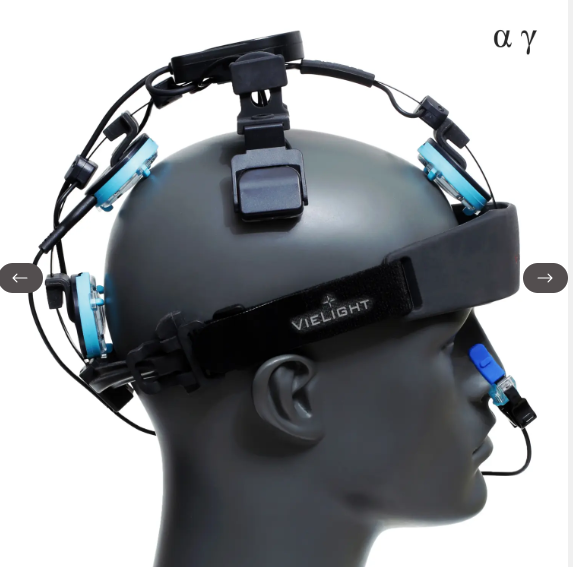
Researchers at the University of Utah and Brigham Young University had followed 26 NCAA Division I football players across an entire competitive season. Half received a real photobiomodulation device—a Vielight Neuro Gamma delivering pulsed near-infrared light through the skull and nasal cavity, three times a week, twenty minutes per session. The other half received sham devices that looked identical but delivered no light.
At the end of the season, the researchers compared pre- and post-season brain MRI scans. The sham group showed exactly what the literature predicted: markers of neuroinflammation and white matter stress from a season of repetitive head impacts. The active PBM group did not. Their brain markers held steady—and in some measures, actually improved.
This study provides compelling photobiomodulation research evidence supporting the benefits of this innovative approach in neuroprotection.
The lead author reportedly said her first reaction was disbelief. That’s how striking the data was.
I read that study as a guy with at least six concussions—that I know of. Four from contact sports. A five-month headache after a hockey hit in 2018. Another concussion in 2025 that added yet another layer to a brain that’s already been asked to compensate too many times.
I didn’t read it and think, I wish this had existed when I was still playing. That’s not how I think anymore. I read it and thought: This changes what I’m able to tell the people sitting across from me in clinic. This changes the questions I’m asking about neuroprotection. This changes the conversation.
But one study—no matter how striking—doesn’t change the conversation by itself. The question is: what does the full body of evidence actually say? How much of what you’ve heard about photobiomodulation holds up when you look at the research honestly?
That’s what this article is for.
How Do You Know What to Trust?
Photobiomodulation Research Evidence: Understanding the Impact
Most people encounter photobiomodulation research the way they encounter most health claims—through a product listing, an Instagram reel, or a friend who swears by their red light panel. The claim sounds compelling. Maybe there’s a citation. But there’s no framework for evaluating whether that citation means anything.
So before I walk you through what the research says, I want to give you the framework for how to evaluate it. This is the same hierarchy that researchers and clinicians use when assessing the strength of evidence for any intervention:
Case studies and case series are reports on individual patients or small groups. They’re valuable for generating hypotheses and documenting what’s possible, but they can’t tell you what’s probable. There’s no control group, no blinding, no way to rule out placebo or natural recovery.
Randomized controlled trials (RCTs) are the gold standard for individual studies. Participants are randomly assigned to receive the real treatment or a sham/placebo. Neither the participants nor the researchers know who got what until the data is in. This is where you start to see cause and effect, not just correlation.
Systematic reviews and meta-analyses take all the RCTs on a given topic, apply strict inclusion criteria, and pool the data. A single RCT might have 17 participants. A meta-analysis might synthesize data from 20 RCTs and 2,000 participants. The picture gets much clearer.
Umbrella reviews sit at the top. They review the systematic reviews and meta-analyses themselves—a review of reviews. When you find an umbrella review of RCTs, you’re looking at the most comprehensive synthesis of clinical evidence available on a topic.
This matters because the PBM space is flooded with cherry-picked citations. A company might reference a single mouse study to justify claims about human brain health. A product page might cite a systematic review that actually concluded the evidence was inconclusive. The hierarchy helps you see through that. And it’s exactly the lens I’ll use for everything that follows.
What the Strongest Evidence Actually Says
In August 2025, a team at Kyung Hee University in Seoul published the most comprehensive assessment of PBM’s clinical effects to date: an umbrella review of meta-analyses of randomized controlled trials. They searched five databases, assessed methodological quality using established tools, and evaluated the certainty of evidence using a modified GRADE framework—the same framework used to evaluate pharmaceutical interventions.
Here’s what they found:
Strongest support: Fibromyalgia symptoms, osteoarthritis-related disability, and cognitive impairment received the most consistent positive evidence across multiple pooled analyses.
Meaningful effects: Pain management across multiple conditions, tissue repair, and wound healing showed statistically significant benefits in the majority of included meta-analyses.
The honest caveat: The overall certainty of evidence for most endpoints was rated low to moderate. That’s not a failure—it’s what happens when a field is still building its evidence base with inconsistent protocols, small sample sizes, and heterogeneous outcome measures across studies.
This is the part most PBM marketing conveniently leaves out. The evidence is real. PBM is not placebo. But the field hasn’t yet reached the level of evidence certainty that you’d see for, say, a well-established pharmaceutical intervention with decades of large-scale trials behind it. It’s getting there. It’s not there yet.
And the biggest barrier? The dose problem. Different studies use different wavelengths, different power densities, different treatment durations, different target areas, and different pulsing frequencies. Until the field converges on standardized protocols, the pooled data will always carry that heterogeneity. As I covered in the 101 article, the biphasic dose response means that more is not always better—and getting the dose wrong doesn’t just reduce effectiveness, it can reverse it. That makes protocol standardization not just a methodological issue, but a clinical one.
Two Studies That Changed the Conversation
Protecting the Brain from Repetitive Impact: The NCAA Football Study
The Lindsey et al. study I opened with deserves a closer look, because it’s not just another efficacy trial. It’s a neuroprotection study—the first to evaluate whether PBM can shield the brain from damage as it’s happening, in real-world athletic conditions.
The setup was rigorous: a double-blind, sham-controlled design conducted over a full 16-week competitive NCAA Division I football season. Twenty-six players were randomized to active or sham PBM, self-administered three times per week for 20 minutes under research staff supervision. Pre- and post-season diffusion MRI scans measured white matter integrity and neuroinflammatory markers.
The sham group showed the expected post-season changes: markers consistent with neuroinflammation and axonal stress from cumulative repetitive head acceleration events. These are the kinds of sub-concussive impacts that don’t show up as diagnosed concussions but accumulate silently, degrading neural integrity over time. The active PBM group showed stabilization—and in some markers, improvement.
The researchers cited prior evidence that PBM reduces neuroinflammatory signaling, enhances mitochondrial function, increases cerebral blood flow, and facilitates neuroplasticity. Their conclusion: by mitigating the microstructural changes associated with repetitive head impacts, PBM may reduce the risk of long-term neurological impairment.
A few important caveats. The sample size was 26 players. The study measured structural brain markers, not functional outcomes like cognitive performance or symptom scores. And the study used one specific device at one specific protocol. This is promising preliminary evidence, not a definitive answer. But as someone who took hits to the head for decades before anyone offered anything beyond “rest and wait,” I can tell you: this line of research matters.
Brain Fog After COVID: The First Controlled Trial
In January 2026, The Lancet’s eClinicalMedicine published a randomized, double-blind, sham-controlled pilot trial evaluating home-based PBM for cognitive dysfunction in people with post-COVID-19 condition—what most people call long COVID brain fog.
Forty-three adults with persistent cognitive symptoms at least 12 weeks after COVID infection were randomized to receive either active PBM or sham treatment using the Vielight Neuro RX Gamma device. Treatment was self-administered at home: 20 minutes per session, six days per week, for eight weeks. The device delivers 810nm near-infrared light pulsed at 40 Hz, targeting hubs of the brain’s default mode network—a network critical for attention, memory, and executive function.
The results were encouraging but nuanced. Active PBM showed greater improvement in composite cognitive scores compared to sham, though the overall group difference just missed conventional statistical significance. Where the effect really showed up was in a pre-specified age subgroup: participants under 45 showed statistically significant cognitive gains. Attention tasks improved consistently across both timepoints measured. No serious adverse events occurred, and compliance was high.
Why does age matter? The study authors cited greater neuroplastic capacity in younger brains. But I think there’s more to it than that. Age-related brain volume loss means more cerebrospinal fluid between the skull and the cortex—and light traveling through fluid isn’t being absorbed by the neurons it’s meant to reach. On top of that, aging mitochondria have reduced cytochrome c oxidase activity at baseline—less of the target enzyme for PBM to work with. And BDNF levels, which PBM upregulates to drive neuroplastic repair, are already depleted in older brains. Stack those factors together and you have a compound dose problem: the same device, running the same protocol, delivering a functionally different dose to an aging brain.
The question isn’t whether PBM works for older adults. It’s whether the protocol needs to be different—higher power density, longer treatment courses, multi-site delivery, or intranasal supplementation to compensate for these age-related barriers. That’s a dosimetry question, not an efficacy question. And it’s exactly the kind of nuance I’ll address in the protocol article later in this series.
Two important transparency notes. This study was funded by Vielight, and all authors had financial relationships with the company. That doesn’t invalidate the research—industry-funded trials are standard in device research and this one used rigorous methodology (double-blind, sham-controlled, pre-registered). But it does mean the results need independent replication, which the authors themselves acknowledge.
For those following my Long COVID series, this study intersects directly with the neurological mechanisms I discussed in What Long COVID Does to Your Brain [LINK: Long COVID Article 1]. COVID’s impact on the brain shares pathways with traumatic brain injury: neuroinflammation, mitochondrial dysfunction, disrupted connectivity. And as I’ll cover in the next Long COVID article on neurofeedback and light therapy protocols [LINK: Long COVID Article 2 when published], it makes mechanistic sense that a tool addressing those pathways might benefit both conditions.
The Brain Studies: TBI, Cognition, and Neurodegeneration
Beyond the two headline studies, the transcranial PBM evidence base has been building steadily. Here’s where it stands:
A 2025 randomized, sham-controlled crossover trial out of Hong Kong studied 17 patients with mild traumatic brain injury. After receiving real tPBM (compared to sham, with a washout period between conditions), participants showed significant improvements in visual working memory, verbal learning, sleep quality, post-concussion symptoms, pain levels, and PTSD symptoms. The crossover design—where each person serves as their own control—is particularly powerful for a small sample size.
In October 2025, a randomized trial of PBM combined with exercise for Parkinson’s disease published results from 63 participants. After an 8-week double-blind phase, followed by open-label extended treatment, both motor and non-motor symptoms showed improvement. This builds on earlier work showing PBM can improve mobility and slow the cognitive decline typically seen over time in Parkinson’s patients.
Margaret Naeser’s group at the VA Boston Healthcare System—among the most respected teams in this space—has published case series showing significant cognitive and mood improvements in ex-football players meeting criteria for possible chronic traumatic encephalopathy. After transcranial LED treatments, participants improved on neuropsychological tests and showed increased connectivity in key brain networks on functional MRI. Instead of continuing to worsen over time, as CTE typically does, these individuals improved.
And at Mass General, a study is currently underway testing tPBM for mild Alzheimer’s disease and mild cognitive impairment using PET scanning to measure tau burden and MRS to assess mitochondrial function—the kind of mechanistic depth that will help explain not just whether PBM works for neurodegeneration, but how.
A systematic review published in 2024 assessed all available clinical trials of tPBM for TBI cognitive outcomes and found improvements across the board, though the authors noted significant heterogeneity in protocols and a lack of large RCTs. That gap is closing, but it isn’t closed yet.
The First Clinical Guidelines
In 2025, something happened that hasn’t happened before in PBM’s history: the field got formal clinical practice guidelines.
A panel of 21 international experts—spanning dermatology, neurology, rehabilitation, and photomedicine—conducted a systematic literature review and then developed evidence-based consensus recommendations through a structured Delphi process. The result, published in the Journal of the American Academy of Dermatology, represents the first clinical practice guideline for the safe and effective use of PBM in medical and aesthetic applications.
Their key findings: PBM is a safe treatment modality for adult patients. Red light PBM does not induce DNA damage. And the panel reached unanimous consensus on recommendations for clinical use across multiple conditions.
This matters for a reason that goes beyond any individual study. Guidelines like these signal that a field has matured to the point where the evidence is sufficient for expert consensus. PBM is no longer in the “interesting but unproven” category. It’s in the “guideline-supported with active research expanding the applications” category. That’s a meaningful shift—and one that most PBM marketing doesn’t bother to mention, because nuance doesn’t sell panels.
What the Research Doesn’t Say (Yet)
The evidence for PBM is real and growing. But the marketing around PBM often runs far ahead of that evidence. Here are the categories of claims I’d encourage you to approach with skepticism:
Cell culture extrapolation. A study showing that near-infrared light increases ATP production in isolated cells does not prove that a consumer LED panel will improve your brain function. The mechanism is real. The leap from petri dish to intact human skull is enormous. Tissue penetration, dose delivery, wavelength-specific absorption—none of that is accounted for in a cell culture study.
Animal model overreach. Mouse and rat studies are essential for understanding mechanisms. They are not evidence that a treatment works in humans at the same dose, duration, or application site. When a product listing cites “scientifically proven” based on rodent data, that’s a red flag.
The “NASA-tested” claim. Yes, NASA funded early research into LED light therapy for wound healing in space. That research was real. But citing a NASA connection from the 1990s to sell a consumer wellness panel in 2026 is a credibility stretch, not a proof point.
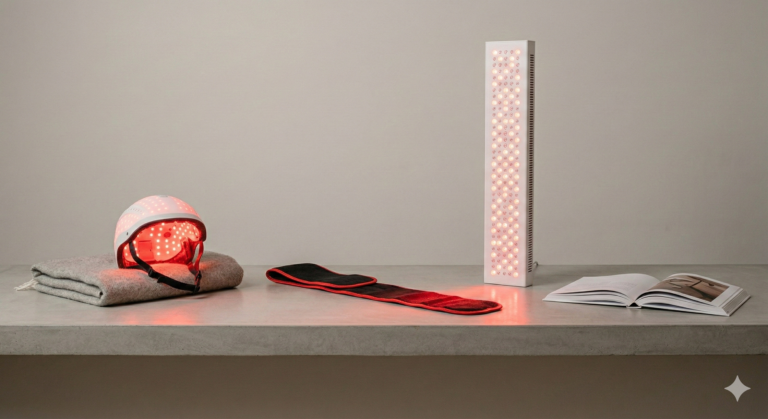
Conflating device categories. A full-body red light panel designed for skin health is not the same technology as a transcranial PBM device designed to deliver specific wavelengths to brain tissue at specific pulsing frequencies. They share a mechanism at the cellular level, but the engineering, the dose delivery, and the target tissue are completely different. Grouping them together under “red light therapy” obscures critical distinctions. This is one of the reasons I’ll dedicate the next article in this series entirely to device categories.
Cherry-picking from mixed results. A study might show improvement on one cognitive measure, no change on three others, and worsening on a secondary outcome. If a company cites only the positive finding, that’s not lying—but it’s not honest science communication, either. Always look for the full picture.
“FDA approved” misrepresentation. Most consumer PBM devices are classified by the FDA as “general wellness” devices, which means they’re not evaluated for medical claims. That’s a legitimate regulatory category—but it’s different from FDA clearance or approval for a specific medical indication. If someone tells you their device is “FDA approved” for treating brain injury, ask for the clearance number.
More light = better results. This violates everything we know about the biphasic dose response, which I covered in the 101 article. PBM follows a dose-response curve where too little does nothing, a moderate dose produces benefit, and too much can actually inhibit the biological processes you’re trying to support. “More power” and “longer sessions” are not selling points—they’re risk factors for overdosing.
Where This Leaves Us
The photobiomodulation evidence base is no longer a collection of scattered case studies and promising animal research. It now includes umbrella reviews of randomized controlled trials, formal clinical practice guidelines from international expert panels, and rigorous sham-controlled studies in conditions ranging from chronic pain to traumatic brain injury to long COVID brain fog.
The photobiomodulation research evidence is real. It’s growing. And for the first time, it’s guideline-supported.
But it’s not a miracle. Photobiomodulation research evidence is a tool—and like any tool, it works when it’s understood, dosed correctly, and matched to the right application.
That’s why education matters more than enthusiasm when discussing photobiomodulation research evidence.
In the next article in this series, I’ll shift from the research to the devices themselves: what the different categories are, what to look for, what to avoid, and how to evaluate whether a device matches the evidence behind its claims. That’s Choosing the Right Device: A Practitioner’s Guide to PBM Categories — PBM 301.
And in the final article, I’ll walk you through how I actually build PBM into a protocol—alongside neurofeedback, PEMF, and the clinical principles Shari and I have developed over years of working with real people in real recovery. That’s PBM 401.
Your cells already know what to do with light. The science is catching up to that truth—carefully, rigorously, and with the kind of honesty that this field needs more of.
The Photobiomodulation Series at TheBrainAndBody.com
← PBM 101: Light Therapy, Explained: What Your Cells Actually Do With Red and Near-Infrared Light [LINK: /photobiomodulation-explained/]
● PBM 201: The Science Behind the Light: PBM Research You Can Actually Trust (You are here)
→ PBM 301: Choosing the Right Device: A Practitioner’s Guide to PBM Categories (Coming soon)
→ PBM 401: PBM in Practice: Building a Light Therapy Protocol That Actually Works (Coming soon)
Affiliate Disclosure
Some links on this site are affiliate links, which means I may earn a small commission if you make a purchase through them. This comes at no additional cost to you. I only recommend products I have personally evaluated, used, or believe in based on my professional experience. My opinions are my own, and affiliate relationships never influence my assessments or recommendations. Vielight affiliate code: “Greymatters.”
Key References
Son Y, Lee H, Yu S, et al. Effects of photobiomodulation on multiple health outcomes: an umbrella review of randomized clinical trials. Systematic Reviews. 2025;14:160.
Lindsey HM, Esopenko C, Jain D, et al. Transcranial photobiomodulation promotes neurological resilience in current collegiate American football players exposed to repetitive head acceleration events. Journal of Neurotrauma. 2026.
Lim L, et al. Photobiomodulation for cognitive dysfunction (brain fog) in post-COVID-19 condition: a randomized double-blind sham-controlled pilot trial. eClinicalMedicine (The Lancet). 2026;79:103730.
Lee TL, Chan DYC, Chan DTM, Cheung MC, Shum DHK, Chan ASY. Transcranial photobiomodulation improves cognitive function, post-concussion, and PTSD symptoms in mild traumatic brain injury. Journal of Neurotrauma. 2025;42(19-20):1695-1707.
Saltmarche AE, Hares O, Bicknell B, et al. Effectiveness of photobiomodulation to treat motor and non-motor symptoms of Parkinson’s disease: a randomised clinical trial with extended treatment. Journal of Clinical Medicine. 2025;14(21):7463.
Maghfour J, et al. Evidence-based consensus on the clinical application of photobiomodulation. Journal of the American Academy of Dermatology. 2025;93(2):429-443.
Ferreira LMA, et al. Photobiomodulation in chronic pain: a systematic review of randomized clinical trials. Frontiers in Integrative Neuroscience. 2026;20:1717372.
Zeng J, Wang C, Chai Y, Lei D, Wang Q. Can transcranial photobiomodulation improve cognitive function in TBI patients? A systematic review. Frontiers in Psychology. 2024;15:1378570.