Resona Vibe PEMF Device Review: A Neurofeedback Practitioner’s Honest Experience After One Year
Summary
After more than a year of daily use, the Resona Vibe has become one of the most impactful wellness tools in my personal recovery toolkit. I originally purchased it for chronic Achilles tendonitis that had resisted every conventional treatment I tried. Within a week of using the device, I was walking without pain — and the benefits have continued to expand from there.
This Resona Vibe review covers my personal experience, what the research says about PEMF therapy, who this device is best suited for, and who should proceed with caution.
Quick Facts:
| Feature | Detail |
|---|---|
| Device | Resona Health Vibe |
| Type | Portable PEMF (Pulsed Electromagnetic Field) therapy device |
| Price | $299 |
| Protocols | 60 core + 70 expansion protocols |
| Max Magnetic Field | 900 µT (9 Gauss) |
| Frequency Range | 1–1,000 Hz |
| Size | 120 × 59 × 12 mm (pocket-sized) |
| Weight | 75 g (2.6 oz) |
| Battery Life | 5 hours at max power, 8 hours at 50% |
| Session Length | 30–45 minutes (most protocols); some run up to 2.5 hours |
| Warranty | 1-year warranty, 30-day money-back guarantee |
| FDA Status | Registered as a general wellness device |
Rating: 9/10 — Exceptional value for a portable PEMF device with broad protocol coverage. Minor points lost for limited warranty length.
What Is PEMF Therapy?
Pulsed Electromagnetic Field (PEMF) therapy delivers low-frequency electromagnetic pulses to the body. These pulses interact with cells and tissues at a fundamental level, influencing processes like cellular energy production, inflammation regulation, and tissue repair.
PEMF therapy is not new. It has been FDA-approved for bone fracture healing and post-surgical recovery for decades, and there are over 600 peer-reviewed studies indexed on PubMed examining its effects across a range of conditions.
What makes PEMF different from many wellness technologies is that it works at the cellular level rather than targeting symptoms on the surface. The electromagnetic pulses can influence ion transport across cell membranes, stimulate ATP production (the energy currency of your cells), and modulate the inflammatory cascade — all of which are foundational to how your body heals and regulates itself.
If you are new to PEMF, think of it this way: your cells have an electrical charge, and when that charge is disrupted by injury, inflammation, or chronic stress, your body struggles to repair itself efficiently. PEMF therapy helps restore that charge.
What Is the Resona Vibe?
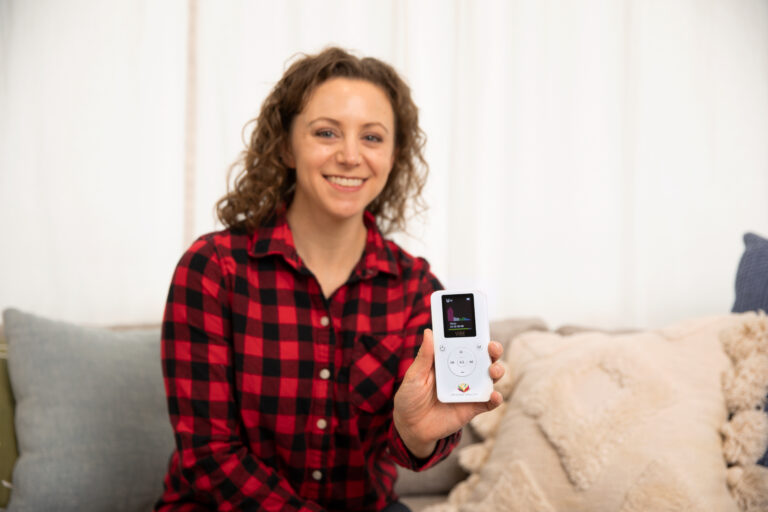
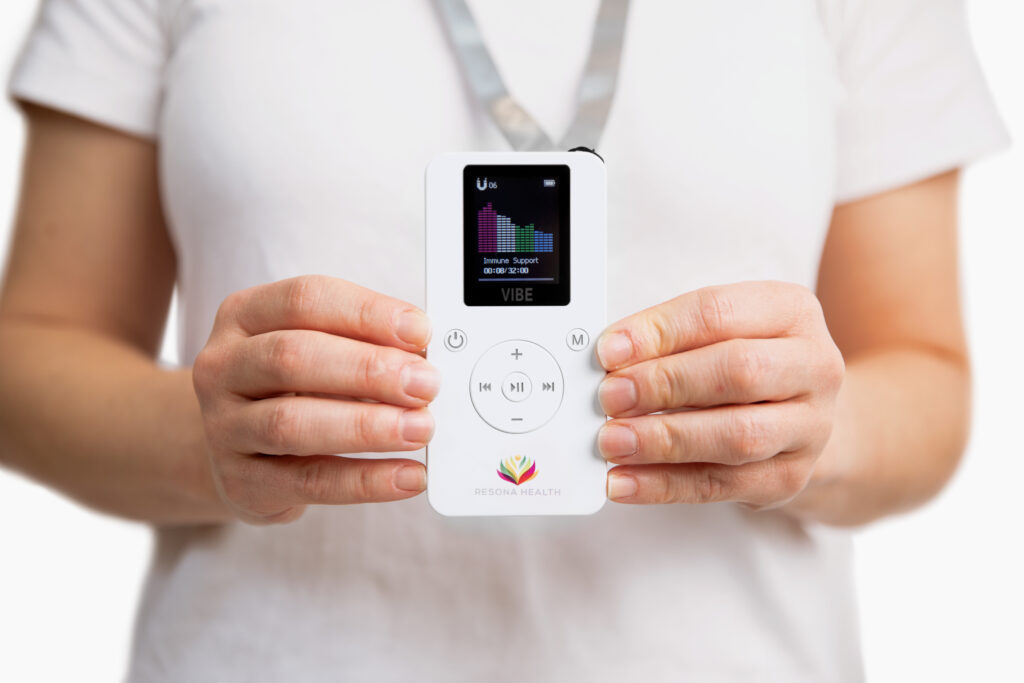
The Resona Health Vibe is a pocket-sized PEMF therapy device designed by Mark Fox, a former Space Shuttle Chief Engineer. Unlike traditional PEMF mats that can cost thousands of dollars and require dedicated space in your home, the Vibe is a standalone, portable unit that you wear in your pocket, on a lanyard around your neck, or placed directly against the area of concern.
The device comes preloaded with 60 core protocols and 70 expansion brain wave protocols. Each protocol is a proprietary sequence of frequency pairs — not simple single frequencies or sweeps, but complex sequences that can include 20 to 50 different frequency combinations per protocol. All frequencies operate in the super-low-energy range between 1 and 1,000 Hz.
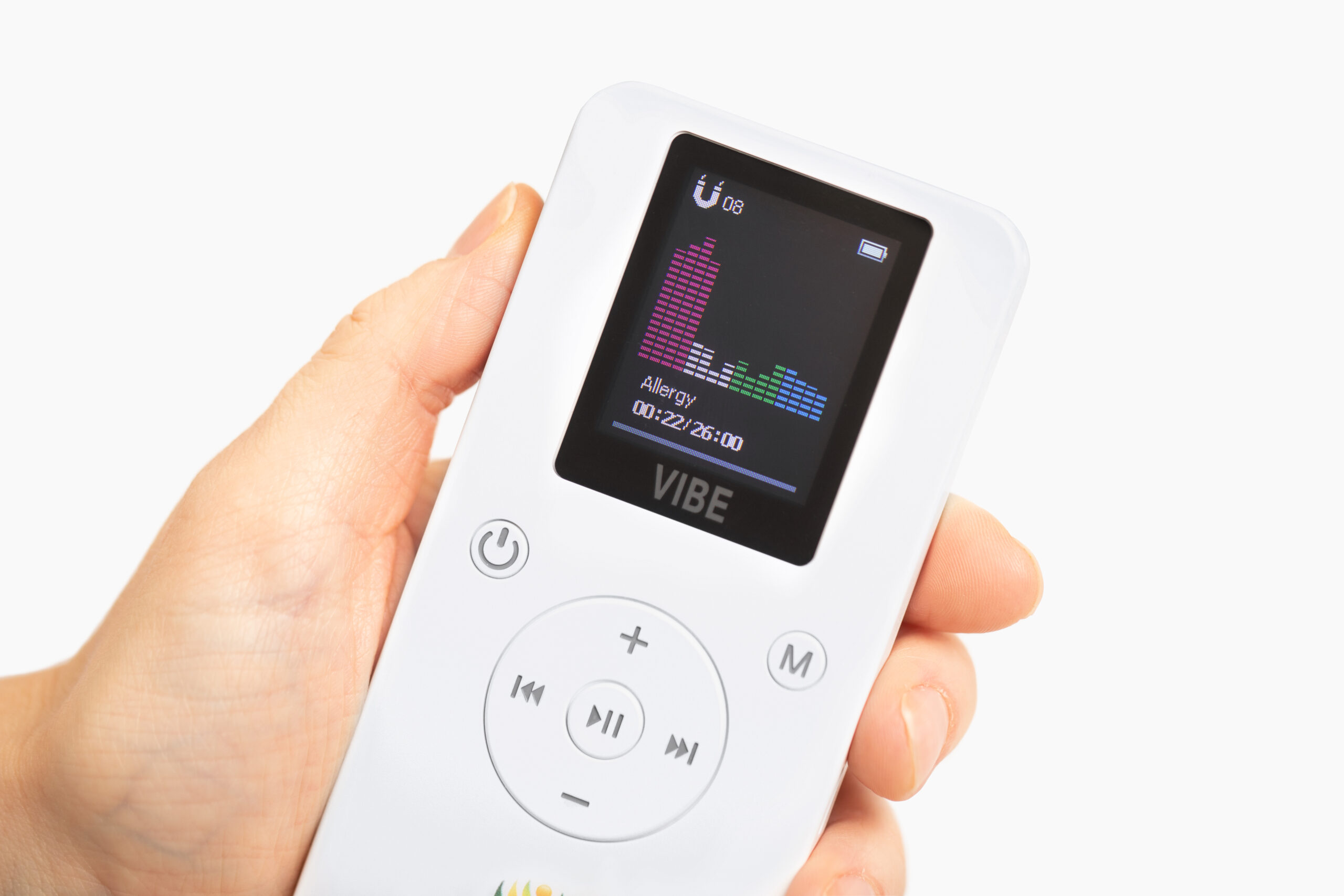
How to use it: You power on the device, scroll to the protocol you want (they are listed alphabetically), press play, and go about your day. The coils are located near the back and bottom of the device, so you position the back of the Vibe against your body with the screen facing outward. Most sessions complete in 30 to 45 minutes, and you can run multiple protocols back-to-back.
Key advantage over PEMF mats: Resona claims the Vibe is 25 times less expensive, 125 times smaller, and 8 times stronger than a traditional PEMF mat. Whether or not those exact comparisons hold across all mat models, the practical difference is clear: you can use this device while working, commuting, watching TV, or sleeping — without setting aside dedicated treatment time.
My Personal Experience
The Problem: Chronic Achilles Tendonitis
I need to give you some context on why the Resona Vibe means so much to me — because I was not a willing buyer. I was a desperate one.
For years, I had dealt with chronic Achilles tendonitis in both feet. As a hockey goalie, the repetitive strain on my tendons was constant. After every game, I would hobble around for a full week. Some mornings, I could barely walk when I first got out of bed. The pain was sharp, persistent, and it was affecting everything — my activity level, my mood, and my ability to focus at work.
I tried everything. Compression socks. Electrical stimulation. Ointments and creams. Dietary changes. Stretching routines. Heat therapy. Ice therapy. Nothing provided lasting relief.
When I first heard about PEMF therapy and the Resona Vibe, I was skeptical — but I was also running out of options.
Week One: Tendonitis
I started using the Vibe in the spring of 2024, selecting the Tendonitis protocol followed by the General Inflammation protocol. I ran these multiple times per day (the recommended frequency is 3–4 times per week, but I was motivated).
Within the first week, I noticed I could walk without pain.
I decided to push the test. I went to the soccer field near my house and ran several full sprints. No pain. Then I played a full hockey game — the kind of game that would normally leave me hobbling for a week. The next morning, I woke up and braced myself for the familiar ache.
Nothing. I was pain-free.
Months Two Through Six: Hip Pain
As I continued using the Vibe consistently, I started to notice that my chronic hip pain was gradually resolving as well. I had not specifically targeted it with a protocol — the improvement seemed to come as a secondary benefit of reducing systemic inflammation. This aligns with the research on PEMF therapy’s ability to modulate inflammation at a cellular level, not just at the site of application.
Spring 2024: Seasonal Allergies
Here is where the story gets interesting. Every spring, I was a daily over-the-counter allergy medication user. Zyrtec was a non-negotiable part of my routine from March through June. When I discovered the Vibe had an Allergy protocol, I figured I had nothing to lose.
I started running the Allergy setting, followed by General Inflammation — the same stacking approach that had worked for my tendonitis. By the end of that first spring season, I had taken a total of five Zyrtec tablets for the entire season. Five. Down from daily use.
Fast forward to spring 2025 — my second year using the Vibe for allergies — and I only needed three Zyrtec for the whole season.
Ongoing: Sleep and Focus
Both my wife Shari and I now use the Vibe regularly for sleep. She also uses it for immune support. I use the Sleep protocol in the evening and have found it noticeably easier to fall asleep and stay asleep. On days when I am struggling with cognitive fog or having difficulty completing a project, I use the Focus and Resolve protocol, and it helps me re-engage.
Shari is a licensed professional counselor (LPC), board-certified in neurofeedback (BCN), and a QEEG diplomate. As practitioners in this space, we both recognize that our experience is subjective — but also that we have the clinical and technical training to evaluate what we are observing in ourselves and in our clients. Our consistent experience is that this device delivers real, noticeable benefits.
What Does the Research Say?
I want to be honest with you about the state of the science, because that is what this site is about. PEMF therapy has a strong and growing evidence base — but it is not a settled science across every condition the Vibe addresses. Here is what we know:
Tendon Healing and Tendonitis
A 2020 pilot study published in the Journal of Orthopaedic Research found that PEMF exposure improved fiber organization, reduced cell density, and supported the healing process in a rat model of Achilles tendinopathy. The researchers concluded that PEMF represents a noninvasive, cost-effective approach that may support tendon healing when applied at the appropriate stage.
A 2024 randomized controlled trial on PEMF as an adjunct to eccentric exercise for Achilles tendinopathy found that while overall outcome scores did not differ between PEMF and sham groups, subgroup analysis of midportion tendinopathy showed significant pain reduction and increased time spent on sports in the PEMF group.
Research on rotator cuff tendinitis dating back to 1984 demonstrated that PEMF therapy provided significant benefit compared to placebo, with 65% of patients becoming symptom-free and another 17% showing major improvement.
My assessment: The evidence for PEMF and tendon healing is promising but still developing. My own experience was dramatic, but individual results will vary. The research supports PEMF as a reasonable tool to try — especially when conventional approaches have not been effective.
Inflammation and Immune Modulation
This is where the evidence is strongest. A comprehensive review published in Bioelectricity (2019) confirmed that PEMF modulates both pro-inflammatory and anti-inflammatory cytokine pathways, supporting the body’s natural resolution of inflammation. Multiple studies have demonstrated that PEMF influences immune cell behavior, including macrophage polarization and mesenchymal stem cell signaling.
A 2024 study on atopic dermatitis in a mouse model found that PEMF stimulation at both 15 Hz and 75 Hz reduced inflammation and serum IgE levels — markers directly involved in allergic reactions.
Research on chronic rhinosinusitis (a condition driven by inflammation in the nasal passages) found that PEMF improved symptoms through its anti-inflammatory, antimicrobial, and circulatory-enhancing effects.
My assessment: The mechanism behind my allergy improvement is likely PEMF’s well-documented ability to downregulate inflammatory and immune hypersensitivity responses. The research supports this, and my year-over-year improvement (from daily Zyrtec to three tablets per season) is consistent with what the literature predicts.
Sleep
A double-blind, placebo-controlled study found that PEMF therapy at low frequencies helped approximately 70% of patients achieve substantial or complete relief from insomnia symptoms, compared to roughly 50% in the placebo group. A 2025 review in the International Journal of Psychiatry described PEMF therapy as effective for improving sleep latency, duration, and quality through mechanisms including GABAergic modulation, melatonin production, and autonomic nervous system balancing.
A large-scale double-blind trial with 485 volunteers found significant improvements in sleep quality, particularly at 16 Hz stimulation frequency, supporting the idea that specific frequencies can meaningfully influence sleep architecture.
My assessment: Sleep is one of the most well-supported applications of PEMF therapy. Both Shari and I have experienced noticeable improvements, and the research base is robust.
Resona Vibe Review- Who Is the Resona Vibe For?
Based on my experience and my understanding of the research, the Vibe is well-suited for:
- People dealing with chronic pain or inflammation who have not found relief through conventional methods
- Athletes and active individuals looking for a portable recovery tool
- Anyone struggling with sleep quality who wants a non-pharmaceutical option
- People managing seasonal allergies who want to reduce dependence on antihistamines
- Wellness practitioners who want to offer or personally use a portable PEMF option
- People interested in nervous system regulation — particularly those dealing with stress, cognitive fog, or trauma recovery
Who Should Be Cautious
The Vibe is not for everyone, and I want to be clear about that:
- People with pacemakers, cochlear implants, insulin pumps, or any implanted electronic medical device should not use this or any PEMF device. The electromagnetic field can interfere with device function.
- People with Grave’s disease or active bleeding should exercise caution.
- This is not a replacement for medical care. If you are sick or injured, see a doctor. The Vibe is a wellness tool — it supports the body’s natural processes, but it does not diagnose, treat, cure, or prevent disease.
- If you are energy-sensitive, start at a lower power level (6–8) rather than the default 10. Most people do fine at full power, but a small percentage may need to ease in.
Pros and Cons
What I Love
- It actually works. My Achilles tendonitis is resolved. My allergy medication use dropped by over 95%. My sleep has improved. These are not subtle changes.
- Truly portable. At 75 grams, you forget it is there. I wear it on a lanyard or keep it in my shirt pocket.
- Easy to use. Select a protocol, press play, go about your day. No apps, no Bluetooth pairing, no subscriptions.
- Broad protocol library. 60 core protocols covering everything from tendonitis to allergies to sleep to focus — plus 70 brain wave expansion protocols.
- Affordable for PEMF. At $299, this is a fraction of the cost of PEMF mats that can run $3,000 to $7,000+.
- 30-day money-back guarantee. You can try it risk-free.
What Could Be Better
- The 1-year warranty feels short for a wellness device at this price point. I would like to see 2–3 years.
- No carrying case included. A small pouch or protective sleeve would be a welcome addition.
- The evidence base varies. While PEMF therapy as a modality is well-researched, Resona’s specific proprietary protocol designs have not been independently validated in peer-reviewed studies for every condition they address. The overall PEMF evidence is strong, but the device-specific claims rely partly on user testimonials and Resona’s internal research.
How I Use It: My Daily Protocol
Here is what a typical week looks like for me:
- Morning (as needed): Focus and Resolve protocol before deep work sessions
- Post-hockey or exercise: Tendonitis + General Inflammation (stacked)
- Evening: Sleep protocol before bed
- Allergy season (spring): Allergy + General Inflammation (stacked), 3–4 times per week
- Shari’s routine: Sleep protocol nightly, Immune Support as needed
Key tip: Resona recommends staying fully hydrated before sessions — at least four 12-oz glasses of water in the four hours before use. I follow this consistently and believe it matters for results.
Recommended starting protocol: Use the Vibe a minimum of 3–4 times per week for the first 30 days. You can use it more often if you prefer — there is no risk of overuse. If your body needs the frequencies, it will respond to them; if not, they pass through with no effect.
How Does the Vibe Compare?
| Feature | Resona Vibe | Typical PEMF Mat | Typical Portable PEMF |
|---|---|---|---|
| Price | $299 | $3,000–$7,000+ | $500–$2,000 |
| Portability | Pocket-sized (75g) | Stationary | Varies (often bulkier) |
| Max Intensity | 9 Gauss (900 µT) | 1–3 Gauss (typical) | Varies |
| Protocols | 130 (60 core + 70 expansion) | Usually fewer, simpler | Varies |
| Ease of Use | Select and play | Multi-piece setup | Varies |
| Session Required | Passive (wear and go) | Lie on mat | Often requires stillness |
Final Verdict
I do not say this lightly: the Resona Vibe has changed my quality of life. As someone who has sustained six concussions, dealt with chronic pain, and works professionally in the neurofeedback and brain health space, I have a high bar for what I recommend. I have seen too many overpromised, underdelivering wellness gadgets.
The Vibe is not one of them.
Is it a miracle device? No, that is for a different post. I do believe in tools that support the body’s innate capacity to regulate and heal. And the Vibe does that, consistently and measurably, for me and for my wife.
If you are dealing with chronic pain, inflammation, sleep issues, or seasonal allergies, and you have tried conventional approaches without success, the Resona Vibe is worth a serious look. At $299 with a 60-day money-back guarantee (when purchased using the link below), the risk is minimal. The potential upside, based on my experience, is significant.
Frequently Asked Questions
Is the Resona Vibe safe? Yes, for most people. The Vibe is registered as an FDA general wellness device. The only absolute contraindication is use near implanted electronic devices (pacemakers, cochlear implants, insulin pumps). People with Grave’s disease or active bleeding should consult a physician first. There are no age restrictions.
How quickly will I see results? This varies. I noticed significant pain reduction within the first week for tendonitis. Sleep benefits were apparent within the first few sessions. Allergy improvement took a full season to appreciate. PEMF therapy tends to produce cumulative benefits over time.
Can I use it too much? No. According to Resona Health, there is no risk of overuse. You can run multiple protocols per day. The recommended minimum is 3–4 times per week for 30 days to establish a baseline.
Do I need to use it forever? PEMF therapy tends to produce the best results with consistent use. Some conditions may resolve (as my tendonitis did), while others like sleep and allergy support benefit from ongoing use.
Can I use the Vibe with metal implants? Yes. Hip replacements, knee replacements, dental implants, and other metal hardware are fine. The only concern is with implanted electronic devices.
What about the Expansion Protocols? The 70 Expansion Protocols focus specifically on brain wave modulation — targeting different brain states for relaxation, focus, creativity, and recovery. These are available in addition to the 60 core protocols.
Is it worth it compared to a PEMF mat? For most people, yes. You get comparable or stronger intensity, far more protocols, and true portability at roughly 4–10% of the cost. The main advantage of a mat is full-body coverage during a session, which some people prefer. But for targeted, on-the-go therapy, the Vibe is hard to beat.
Affiliate Disclosure: This article contains affiliate links, which means I may earn a small commission if you make a purchase through them. This comes at no additional cost to you. I only recommend products I have personally used and believe in based on my professional experience. My opinions are my own, and affiliate relationships never influence my assessments or recommendations.
Medical Disclaimer: The Resona Vibe is a general wellness device. It is not intended to diagnose, treat, cure, or prevent any disease. The information in this article reflects my personal experience and should not be taken as medical advice. Always consult with a qualified healthcare provider before starting any new wellness regimen, and do not discontinue any current medications or treatments without medical guidance.
About the Author
David Johansson is a neurofeedback practitioner, certified brain health coach, and the founder of TheBrainAndBody.com. With over 30 years of experience spanning electrical construction, project management, and applied neuroscience, David evaluates wellness technology from both a clinical and practical perspective. His personal experience with six concussions has deepened his expertise in brain injury recovery and nervous system regulation. He works alongside his wife and professional partner, Shari Johansson (MA, LPC, BCN, QEEG-D), under their practice Total Neuro Solutions.