Muse S Athena Review: What an EEG Headband Showed Me That My Watch Couldn’t
Product Reviews | Brain-Sensing Technology
By David Johansson
For years, my watch told me I was a terrible sleeper.
Most nights it logged 25 minutes of deep sleep. Some nights, a flat zero. If you believed the wrist, my brain was barely getting any of the deep sleep that’s supposed to keep it healthy.
Here’s the problem. I’ve been a good sleeper my whole life.
I trained myself for it as a teenager; breathwork, body relaxation, the kind of thing I picked up half-convinced I was going to live like the frontiersmen I couldn’t stop reading about. I lie down, I’m out. So I had decades of waking up rested on one side, and a wrist tracker calling me a liar on the other.
One of us was wrong. I wanted to know which.
So I did what I’ve learned to do with every wellness gadget that crosses my desk: I stopped trusting the marketing and started asking what the thing actually measures.
A wrist tracker watches two things; how much you move, and your pulse, read through the skin by a little green light. From those two signals, an algorithm guesses your sleep stages. Then I looked down at my own watch, at that soft, flexible band sliding a half-inch up and down my wrist all night, and it fell apart for me. That’s what we’re trusting to tell us about our brains? It can tell I’m lying still and my heart rate dropped. The rest is a guess.
Then I heard Muse had taken their headband far enough that you could wear it to bed and record your actual brain waves overnight. Not movement. Not heart rate. The real electrical signal, the same kind I’ve spent years watching on clinical equipment alongside my wife Shari, who’s the real EEG expert between us.
That got my attention.
What the Muse S Athena Actually Is
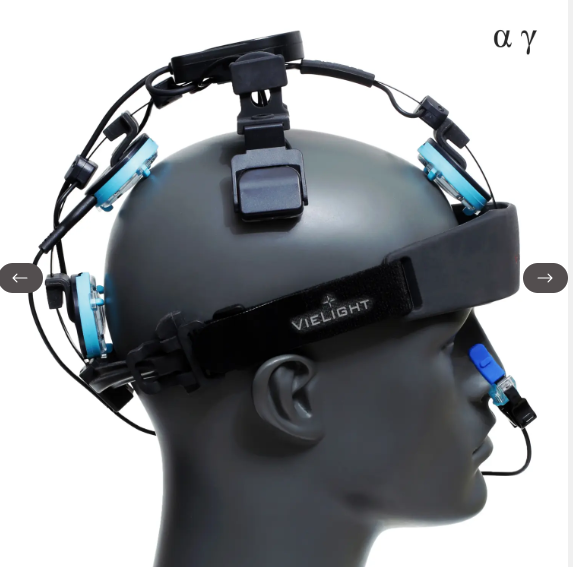
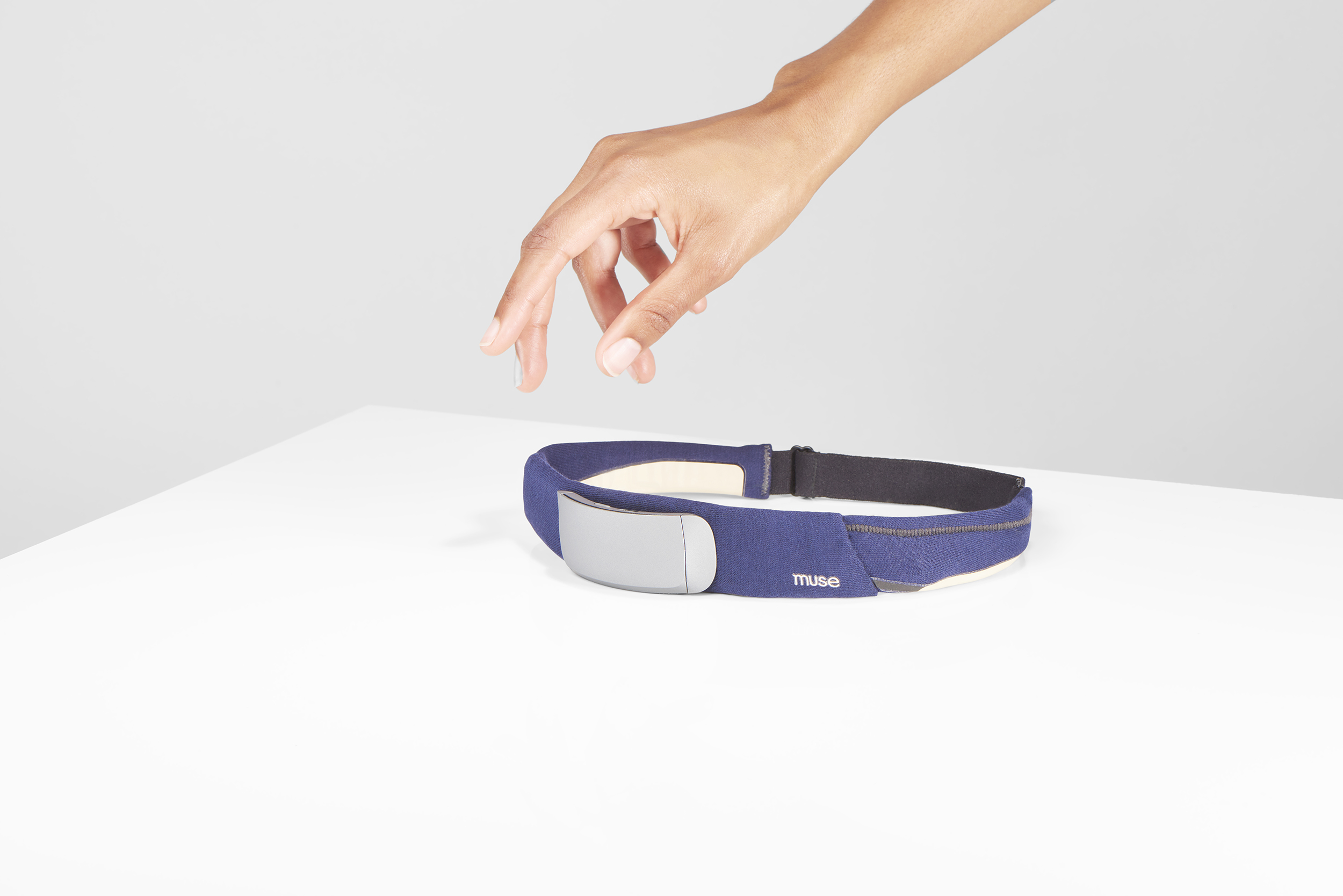
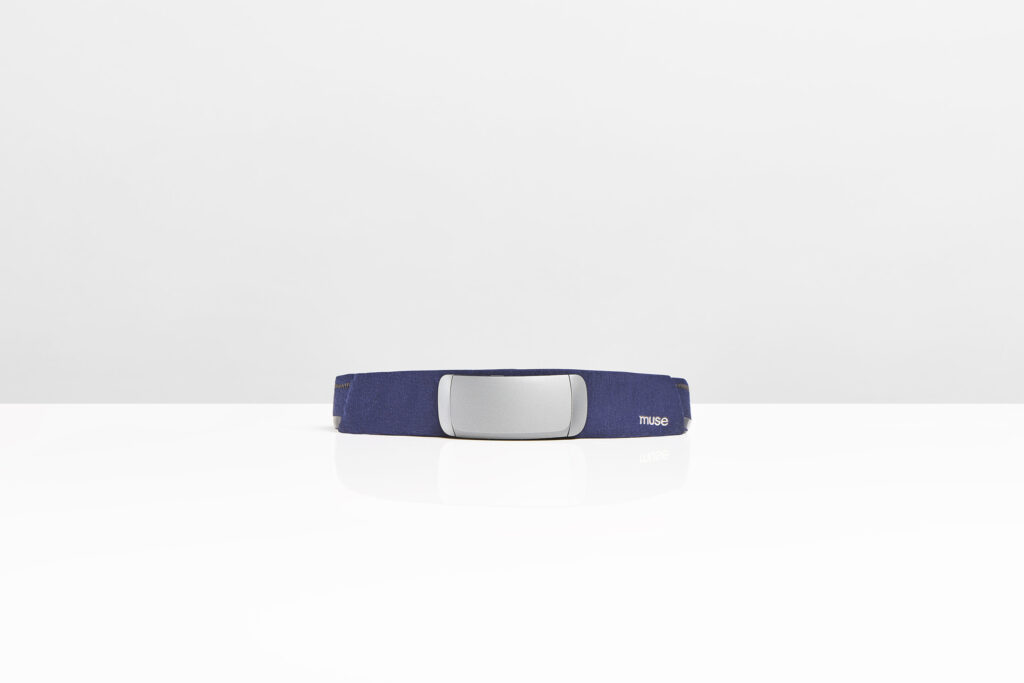
The Muse S Athena is a soft headband you sleep in. Where a watch reads your body from the outside, this sits across your forehead and behind your ears and picks up the electrical activity your brain is actually producing, the same class of signal a sleep lab records, just from fewer spots.
It’s the third generation of Muse’s sleep band, and this one adds a sensor most people have never heard of: fNIRS, which reads blood flow in the front of your brain. EEG tells you the brain is active. fNIRS hints at how hard it’s working. I’ll be straight with you, the fNIRS side is the newest and least-proven part of this device.
There’s also a feature called Deep Sleep Boost that does more than measure. Once the headband detects you’ve dropped into deep sleep, it plays faint pulses of sound timed to your own slow brain waves, trying to reinforce them, and it backs off on its own if you stir. The idea isn’t fringe; researchers have been studying timed sound to strengthen slow-wave sleep for over a decade. The improvement numbers Muse cites come from their own testing, so I hold those loosely. But the mechanism is real.
My Two Weeks
I went in braced for bad news. I figured the Muse would confirm what the Garmin had been telling me, and I’d have to rethink decades of assuming I slept well.
That’s not what happened.
Over the first two weeks, my deep sleep averaged 49 minutes a night. Not 25. Not zero. My REM came back in healthy ranges too. My total sleep was shorter than I’d like, but that’s on me and my bedtime, not on the quality of the sleep itself.
The lifelong good sleeper wasn’t fooling himself. The watch was just wrong, and wrong in the same direction every single time.
One thing I haven’t mentioned, though: the headband takes getting used to. The first few nights I woke up more than I normally would, aware of something strapped to my forehead. By the end of the first week it had mostly faded into the background, but it’s a real adjustment, so you should expect a few rough nights up front.
My Professional Read on the Signal
This was the part I was most skeptical about going in.
I’ve spent years around clinical-grade EEG. Shari is the EEG expert between us — she still records EEGs for some of the toughest cases that come through the Denver area, and I run a handful of remote neurofeedback clients myself. So I know what the medical-grade setup looks like: full sensor arrays, conductive paste, amplifiers that cost more than a car. A few dry sensors on a fabric band is a different animal, and I expected the gap to be embarrassing.
It wasn’t. The stage transitions tracked the way I’d expect from clinical EEG, deep sleep early in the night, REM stacking up toward morning, the awake moments landing right where I remembered stirring. And it was consistent night to night, which is the real tell that you’re looking at signal and not noise. Noise looks different every time. Signal repeats.
I wouldn’t make a diagnosis off it, and I wouldn’t ask anyone else to. But as a window into the trends in my own brain, it earned more trust than any consumer device I’ve ever put on.
What the Research Actually Says
Here’s where it stops being my hunch and becomes something you can measure.
Sleep scientists have spent years putting these devices up against polysomnography, the full, wired overnight lab study that’s the gold standard for scoring sleep. Before I give you the numbers, here’s how to read them. The agreement score researchers use is Cohen’s kappa: 0.21–0.40 is fair, 0.41–0.60 is moderate, 0.61–0.80 is substantial, and above 0.81 is almost perfect. Keep that scale in your back pocket.
Telling asleep from awake, the wrist devices do fine – north of 90%. That’s the easy part.
Pulling apart light, deep, and REM is where they fall down, and that’s the part that actually matters. When researchers tested six wrist devices against the lab, Garmin included, agreement on staging landed only between fair and moderate (kappa 0.21–0.53, for those who want to geek out on the numbers). Rings tend to edge watches- an Oura came in around 0.65 against an Apple Watch’s 0.60 and a Fitbit’s 0.55- which explains some of the back-and-forth you read online. But none of them reach the bar I’d want before making a clinical call. Deep sleep is the worst of it: some devices catch only half of it, and not the same half twice.
The Muse, measured the same way, comes back in a different tier, substantial agreement with the lab (kappa around 0.76), 88–96% accuracy across stages, and near-perfect on REM and wake. That’s not me trusting the marketing. That’s the headband holding up against the same gold standard the watches failed.
I’ll be fair: these are different studies on different people, so it isn’t a clean head-to-head, and I’d never pretend otherwise. But the gap is real and it’s wide. Wrist staging clusters in fair-to-moderate. Muse lands in substantial. Those are two different conversations.
On the meditation side, the evidence is real but more modest. A meta-analysis of consumer neurofeedback paired with mindfulness found a small positive effect on psychological distress – emphasis on small – and a Muse study reported roughly a 16% drop in perceived stress over four weeks. Several of those studies are small or company-connected, so I weigh them accordingly. My read: the feedback helps some people actually stick with a practice. It doesn’t do the work for you.
On Deep Sleep Boost and fNIRS, the underlying science is legitimate; timed acoustic stimulation of slow waves has a real research base, and fNIRS is well-established in the lab for tracking mental effort. What’s new is doing both in a consumer headband at home. Promising. Not yet independently proven. Watch those numbers; don’t bank on them.
Why This Matters Beyond Me: The Neurofeedback Angle
This is exactly why sleep data matters so much in neurofeedback.
Before training begins, you want to know a client is actually getting enough deep sleep to make the work worthwhile. Much of the brain’s overnight consolidation and recovery happens in deep sleep, so if someone is chronically short on it, you’re building on a shaky foundation.
And once training is underway, sleep becomes a second, independent line of feedback. If deep sleep trends upward alongside the training, that’s a real-world signal, for the practitioner and the client, that the work is landing. With remote clients especially, a dependable read on sleep matters even more, because I’m not in the room.
A device whose staging is a coin-flip can’t carry that weight. One that holds up against the lab can.
Who It’s For – and Who Should Skip It
Consider the Athena if you:
- have ever wondered what your sleep actually looks like – not how long, but how good
- own a wrist tracker whose sleep numbers never match how you feel
- want real-time feedback to make a meditation practice finally stick
- are managing stress, focus, or nervous-system regulation and want a dependable signal to track over time
Think twice if you:
- suspect a real sleep disorder like apnea – this won’t catch it, and it’s no substitute for a clinical sleep study. See a provider.
- tend to spiral over numbers. Nightly data helps some people and quietly stresses others.
- can’t stand something on your head all night. Most people adjust within a week; some never do.
- don’t want a recurring cost. The good stuff sits behind a membership – more on that next.
What’s Good, What’s Not
What I like: It measures your brain directly, and that staging has been checked against a real sleep lab. The feedback is dependable, and in my case it corrected a worry the watch had manufactured. It’s a soft band, not a rigid clip, which matters a lot when you’re sleeping in it. And it’s genuinely trying to do more than count numbers.
What could be better: Much of the content and the deeper analytics live behind Muse Premium at around $95 a year, on top of a $475 device- worth it for what you get, but you’re buying into an ecosystem, and you deserve to know that going in. Overnight comfort is personal. It’s not a diagnostic tool. And the newest features- fNIRS, Deep Sleep Boost – are the least independently validated parts of the package.
The Verdict: 9/10
I don’t hand out a 9 lightly, and I know I’m giving it after two weeks, not a year. So here’s what the number means.
It told me something true about myself and settled a years-long argument with my wrist. The measurement held up against the same gold standard the watches failed. And it left me better informed instead of sold to.
The reason it isn’t a 10 is plain: the membership runs on top of a premium price, and a headband all night isn’t for everyone. I’ll revisit this once I’ve got months of data, not weeks, and if anything changes, I’ll say so right here.
Here’s the bigger truth, and it’s the reason I do this work at all: your body isn’t a black box, and you don’t have to take a guess on faith just because it came with a charging cable. You’re allowed to actually know what your sleep is doing. For years a watch told me a story that wasn’t true. A headband that reads the real signal told me a better one, and that’s worth a great deal.
(My link usually carries a reader discount — 15% as I’m writing this. Membership pricing varies; plan on roughly $95 a year.)
Frequently Asked Questions
Is it accurate? For sleep staging, more than I expected, and far more than the wrist tracker it replaced. Against a clinical sleep study, the Muse-S platform showed substantial-to-near-perfect agreement. It’s still a consumer device, not diagnostic equipment, but the measurement is well-checked.
Do I need the paid membership? Much of the guided content and the deeper analytics live behind Muse Premium (around $95/year, though pricing varies). You can use core features without it, but the experience most people are paying for assumes the subscription.
Can it diagnose sleep apnea? No. It doesn’t measure breathing or oxygen the way a sleep study does. If you suspect a disorder, see a provider.
How is this different from my Oura, Garmin, or Apple Watch? Those infer sleep from heart rate and movement, and that inference can be way off; my Garmin underreported my deep sleep for years. The Athena reads your brain’s electrical activity directly.
What’s fNIRS, and should I care? It reads blood flow in the front of your brain to estimate mental effort. It’s the newest, least-proven feature- interesting, not authoritative.
Does Deep Sleep Boost work? It’s built on a legitimate idea with real research behind it. The improvement figures are Muse’s own, so treat them as promising, not proven. It pauses itself if you stir, which is a sensible safeguard.
How soon will I notice anything? Sleep insights are immediate- you get a report the first morning. Meditation and stress benefits are cumulative and modest; think weeks, not days.
Disclosures
Affiliate Disclosure: This article contains affiliate links. I may earn a small commission if you buy through them, at no cost to you. I only recommend products I have personally used and believe in. My opinions are my own, and affiliate relationships never influence my assessments.
Medical Disclaimer: The Muse S Athena is a consumer wellness device. It is not intended to diagnose, treat, cure, or prevent any disease, and it is not a substitute for a clinical sleep study or medical evaluation. This article reflects my personal experience, not medical advice. Consult a qualified provider before starting any new wellness regimen.

Written by
David Johansson
Certified brain health coach with BCIA didactic coursework in neurofeedback and five years as a neurofeedback technician. He has sustained several concussions and spent years on the recovery work that followed, measuring what actually helped against his own quantitative EEG data.
He is a co-owner and operations manager at Total Neuro Solutions in Colorado, the neurofeedback practice led by his wife, Shari Johansson, MA, LPC, BCN, QEEG-D, a board-certified neurofeedback specialist and QEEG diplomate.
More about David →