PEMF Therapy, Explained: What Pulsed Electromagnetic Fields Actually Do Inside Your Cells
By David Johansson | TheBrainAndBody.com April 2026
The first time I read the words “pulsed electromagnetic field therapy,” I assumed it was wellness pseudoscience. I’d spent years in neurofeedback by then, and I’d seen enough sleek marketing wrapped around thin mechanisms to develop a reflex.
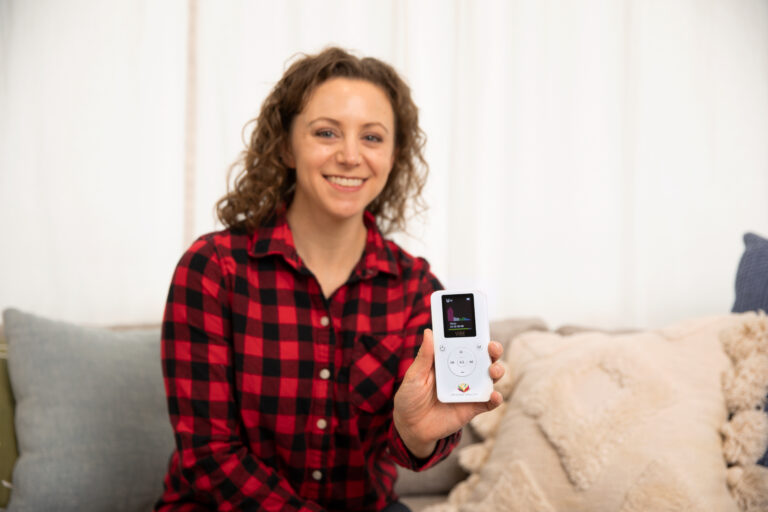
Years later, I run a PEMF device daily.
What changed my mind wasn’t a testimonial or a slick demo. It was learning what pulsed electromagnetic fields actually do inside human cells — and recognizing that the mechanism wasn’t fringe at all. It was electrical engineering applied to biology, with a research base going back nearly fifty years and FDA approval since 1979.
If you’ve heard “PEMF” thrown around in chronic pain forums, sleep podcasts, or PTSD recovery conversations and wondered whether it deserves your attention, this post is the foundation. We’ll cover what PEMF actually is, what’s happening at the cellular level, where the evidence is solid and where it isn’t, who shouldn’t use it, and how to evaluate a device without getting sold.
What PEMF Actually Is — and What It Isn’t
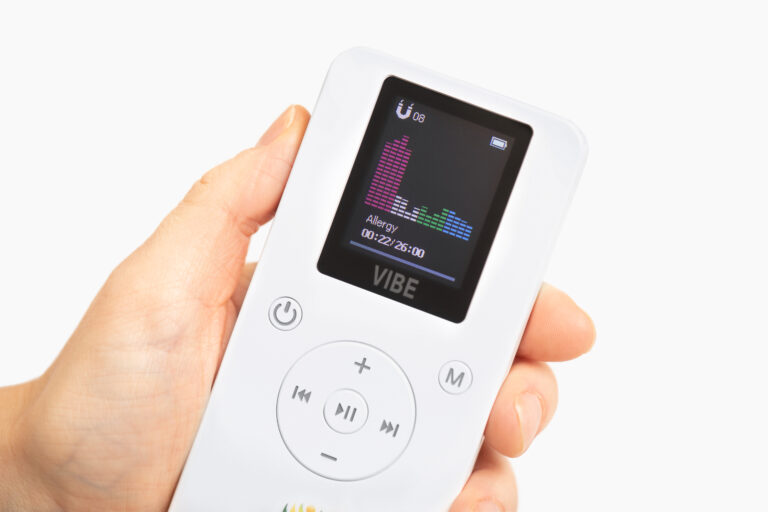
PEMF stands for pulsed electromagnetic field. A device generates a low-frequency electromagnetic field — a copper coil pulses electrical current, which creates a magnetic field, which pulses through the tissue you place near it. The pulses are measured in hertz (cycles per second) and gauss or tesla (field strength). Different protocols use different frequencies because different tissues and processes respond to different signals.
A few distinctions worth getting straight.
PEMF is not the EMF you’ve been told to worry about. Most concerns about electromagnetic fields — cell signals, Wi-Fi, smart meters, 5G — center on continuous, ambient, often high-frequency exposures sustained over months and years. PEMF is the opposite on every dimension: low-frequency (usually under 100 Hz, in the same range as your body’s own electrical activity), low-intensity (microtesla to low gauss, often weaker than the Earth’s natural magnetic field), pulsed rather than continuous, and applied intentionally for short sessions. The therapeutic frequencies most PEMF devices use overlap with the Schumann resonance — the Earth’s natural electromagnetic rhythms that human biology evolved alongside. None of this dismisses ambient EMF concerns. It just means PEMF and the chronic background exposures driving most of those concerns aren’t the same category of input. One is a brief, targeted signal designed to work with your physiology. The other is constant background noise your body never agreed to.
PEMF Therapy is not the same as TENS or e-stim. Those send electrical current directly into nerves to block pain signals or contract muscles. PEMF doesn’t push current into you. It generates a magnetic field that influences charge dynamics inside cells without direct electrical contact.
PEMF is not magnet therapy. Static magnets — the kind in bracelets and mattress pads — produce a fixed field. They don’t pulse. The pulsing matters. A static field doesn’t trigger the cellular responses we’ll cover in a moment; the rhythmic change in field strength is what does the work.
PEMF is not new. Hospitals have used PEMF for fracture healing since the FDA approved it in 1979. NASA studied it in the early 2000s for tissue regeneration in microgravity. Veterinary medicine uses it extensively for tendon and ligament injuries. The reason it sounds fringe in wellness contexts is that the consumer device market arrived decades after the clinical evidence — and the marketing has often outrun the science.
What’s Happening Inside Your Cells
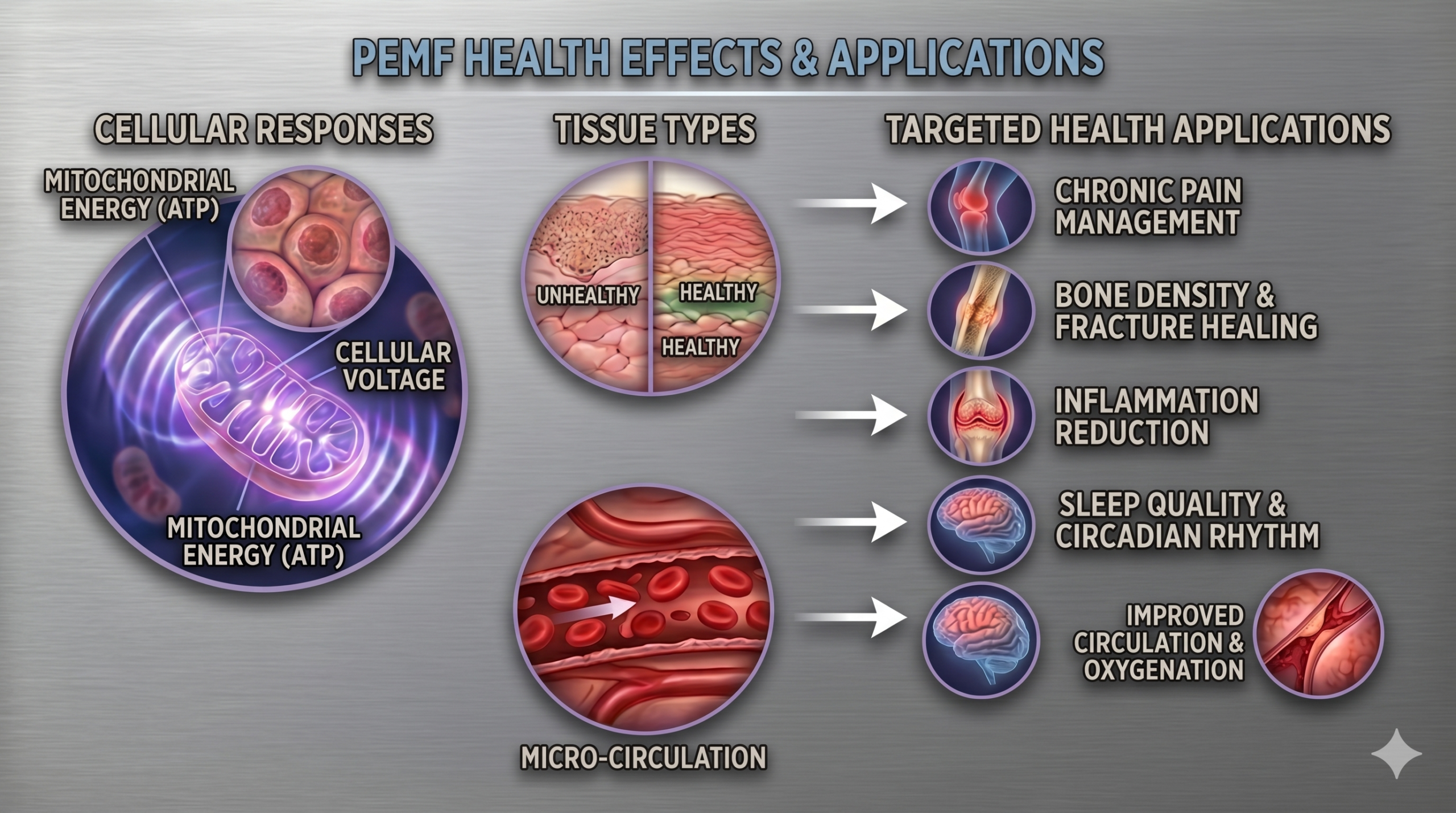
Every cell in your body carries an electrical charge across its membrane. A healthy cell maintains roughly -70 to -90 millivolts. When that voltage drops — from injury, chronic inflammation, prolonged stress, or aging — cellular function drops with it. Repair slows. Communication between cells gets noisy. Mitochondria produce less ATP, the fuel every cell runs on.
Dr. William Pawluk, who’s spent four decades studying PEMF clinically and is one of the most-cited authorities in the field, frames it this way: PEMF doesn’t add energy directly. It restores the conditions under which cells generate their own energy more efficiently.
A few specific mechanisms the research has documented:
PEMF influences ion transport across cell membranes — particularly calcium, which acts as a signaling molecule inside cells. Better ion movement means better cellular communication.
PEMF stimulates ATP production in the mitochondria. More ATP means more capacity for repair, regeneration, and metabolic work. (For a closely related mechanism using a different physical input — near-infrared light — see Light Therapy, Explained.)
PEMF modulates inflammatory signaling. A 2019 review in Bioelectricity documented PEMF influencing both pro- and anti-inflammatory cytokine pathways — meaning it can help dampen the chronic inflammation that keeps tissues from resolving.
PEMF affects autonomic balance and neurotransmitter activity. A 2025 review in the International Journal of Psychiatry Research (Nayak et al.) described PEMF improving sleep through GABA modulation, melatonin release, and parasympathetic nervous system support — with the most-studied protocols using low-intensity pulses (5–50 microtesla) at 1–4 Hz for 20–60 minutes before bedtime.
None of this is magic. It’s physiology. The same way exercise stimulates mitochondrial biogenesis or sunlight triggers vitamin D synthesis, PEMF is a physical input that triggers downstream biological responses. The question isn’t whether the mechanism exists. It’s whether a given device, at a given dose, produces meaningful change in a given person.
Worth saying directly: you won’t feel any of this happening. PEMF doesn’t produce heat, vibration, tingling, or any noticeable sensation during a session. The most common mistake new users make is interpreting the absence of feeling as the absence of effect. The mechanism is cellular and quiet. Results show up in what stops happening — pain that resolves, sleep that lengthens, inflammation that settles — not in what you notice during the session itself. If you’re someone who needs to feel a treatment working to trust it, PEMF will frustrate you until you make peace with that.
What the Research Supports — and What It Doesn’t
Over 600 PEMF studies are indexed on PubMed, spanning bone healing, chronic pain, depression, sleep, wound healing, post-surgical recovery, neurodegenerative disease, and more. Some of those studies are strong. Some are small or methodologically limited. The body of evidence as a whole supports PEMF as a legitimate modality with clear effects on tissue, but the strength of evidence varies dramatically depending on the application.
Where the evidence is strongest:
Bone fracture healing — decades of FDA-approved use, with consistent clinical results.
Chronic musculoskeletal pain, particularly osteoarthritis and post-surgical recovery — multiple meta-analyses support reduced pain and improved function.
Depression, particularly treatment-resistant cases — transcranial magnetic stimulation (a high-intensity cousin of PEMF) is FDA-approved for major depression, and lower-intensity PEMF protocols show preliminary support for mood symptoms.
Where the evidence is preliminary or mixed:
Sleep, anxiety, autonomic regulation — promising mechanism studies, fewer large clinical trials.
PTSD — an area I’ve written about separately, with growing case data and a few small clinical studies.
Cognitive function and post-concussion recovery — early research is encouraging but far from conclusive.
Where the marketing often outruns the evidence:
Specific device protocols. The PEMF modality has decades of research. Individual proprietary frequency sequences sold by specific brands — those rely heavily on internal company research and user reports. The mechanism is well-supported; specific protocol claims often aren’t independently validated.
If a brand can’t tell you which peer-reviewed studies support their specific protocol, treat the claim with the same caution you’d apply to any other piece of marketing.
Who Should Not Use PEMF
This part isn’t optional reading. PEMF is generally well-tolerated, but the contraindications are real and not negotiable:
Anyone with an implanted electronic medical device — pacemaker, cochlear implant, insulin pump, deep brain stimulator. The electromagnetic field can interfere with device function. No workarounds.
Anyone who is pregnant. The research on PEMF in pregnancy is insufficient to clear it for use, and no responsible practitioner will tell you otherwise.
Anyone with active bleeding, a recent organ transplant, or active malignancy — talk to your physician before considering PEMF. Some of these are absolute contraindications; others are case-by-case.
Anyone with Grave’s disease or severe hyperthyroidism. The autonomic effects can complicate management.
If you’re on medications that affect your nervous system or cardiovascular function, loop in your provider before starting any PEMF protocol. Not because PEMF is dangerous, but because integration with your existing care matters.
How to Evaluate a Device Without Getting Sold
A few honest questions to ask before you spend money:
What frequency range and field strength does the device produce, and what does the manufacturer cite as evidence for those parameters? Vague answers are a red flag.
Is the device intended for general wellness use, or does it carry FDA clearance for a specific indication? Both can be legitimate, but they exist at very different evidence tiers.
What’s the warranty and the return policy? Wellness technology is highly individual. A 30-day money-back guarantee tells you the company believes in their product enough to absorb the risk of customer mismatch. (For readers considering the Resona Vibe specifically: purchases made through the affiliate link in my device review extend that 30-day window to 60 days.)
What do clinicians who use PEMF in practice — not influencers — say about the device? Look for sources who acknowledge limitations alongside benefits. Anyone who only tells you what’s great about a tool isn’t telling you the whole truth.
For one practitioner’s year-long evaluation of a specific consumer PEMF device, see my Resona Vibe PEMF Device Review. It’s an example of how I worked through these questions on a single device — including what the device does well and what I’d still like to see improved.
The Grounded Takeaway
PEMF works on physiology, not belief. The mechanism is well-established. The device market is uneven. The right tool for the right person, used at the right dose, can support real cellular and inflammatory processes. The wrong tool, oversold, can cost you money and leave you frustrated.
If you’re considering PEMF for chronic pain, sleep issues, inflammation, or nervous system regulation, the most useful next step is a conversation with a clinician who understands both your specific situation and the modality itself. A device is one input. Your overall recovery context — sleep, nutrition, movement, stress, medical care — is the system PEMF would be supporting.
Discernment over dependency. Mechanism over marketing. Education over promises.
If you want to go deeper on the cellular-mechanism side, the companion post Light Therapy, Explained: What Your Cells Actually Do With Red and Near-Infrared Light covers the same territory for photobiomodulation. For applied PEMF in a specific clinical context, see Can a Device in Your Pocket Help With PTSD? What 500 People Discovered About PEMF Therapy.

Written by
David Johansson
Certified brain health coach with BCIA didactic coursework in neurofeedback and five years as a neurofeedback technician. He has sustained several concussions and spent years on the recovery work that followed, measuring what actually helped against his own quantitative EEG data.
He is a co-owner and operations manager at Total Neuro Solutions in Colorado, the neurofeedback practice led by his wife, Shari Johansson, MA, LPC, BCN, QEEG-D, a board-certified neurofeedback specialist and QEEG diplomate.
More about David →Affiliate Disclosure: This post is editorial. It links to my Resona Vibe PEMF Device Review, which contains affiliate links; readers who purchase through those links receive an extended 60-day money-back guarantee. I only recommend products I have personally used and believe in based on my professional experience. Affiliate relationships never influence my assessments or recommendations.
This post is for educational purposes and does not constitute medical advice. Talk to your physician before starting any new therapy, particularly if you have an existing medical condition, take prescription medication, or are pregnant.
References
- Pawluk, W. (2017). Power Tools for Health: How pulsed magnetic fields (PEMFs) help you. FriesenPress.
- Bassett, C. A. L. (1989). Fundamental and practical aspects of therapeutic uses of pulsed electromagnetic fields (PEMFs). Critical Reviews in Biomedical Engineering, 17(5), 451–529.
- Markov, M. S. (2007). Expanding use of pulsed electromagnetic field therapies. Electromagnetic Biology and Medicine, 26(3), 257–274.
- Goodwin, T. J. (2003). Physiological and molecular genetic effects of time-varying electromagnetic fields on human neuronal cells. NASA Technical Paper, NASA/TP-2003-212054.
- Ross, C. L., Zhou, Y., McCall, C. E., Soker, S., & Criswell, T. L. (2019). The Use of Pulsed Electromagnetic Field to Modulate Inflammation and Improve Tissue Regeneration: A Review. Bioelectricity, 1(4), 247–259. https://doi.org/10.1089/bioe.2019.0026
- Nayak, A., Sahoo, J., Dash, P., & Rout, D. (2025). PEMF therapy: A non-pharmacological approach to insomnia: A comprehensive review. International Journal of Psychiatry Research, 7(1), 102–106. https://doi.org/10.33545/26648962.2025.v7.i1b.89
- U.S. Food and Drug Administration. (1979). Premarket approval of pulsed electromagnetic field therapy for non-union bone fracture healing. Regulatory history of bone growth stimulator devices.